October 30, 2026
Leaning trees can add character to a landscape, but they may also pose serious risks to people, buildings, vehicles, and nearby property. While some trees naturally grow at an angle, sudden changes in position or visible signs of structural weakness can indicate an increased chance of falling. Knowing when to contact a tree removal company helps property owners address potential hazards before they cause injuries or costly damage.
Understanding Why Trees Lean
Not every leaning tree is dangerous. Some develop a gradual lean as they grow toward sunlight, while others become angled because of uneven growth patterns or environmental conditions. A tree that has maintained the same position for years may be structurally sound, but changes in its angle deserve closer attention.
Root damage, soil erosion, disease, and severe weather can all affect a tree's stability. Heavy rainfall may soften the ground around the roots, while strong winds can place additional pressure on the trunk and root system. When these conditions cause a tree to shift, a tree removal company can evaluate whether it remains safe or requires removal.
The angle of a tree is another important consideration. According to University of Maryland Extension, if a tree is leaning more than 15% from vertical, it should be removed. Property owners should also consider whether the lean developed recently and whether the tree shows additional signs of instability.
Recognizing Signs of Structural Instability
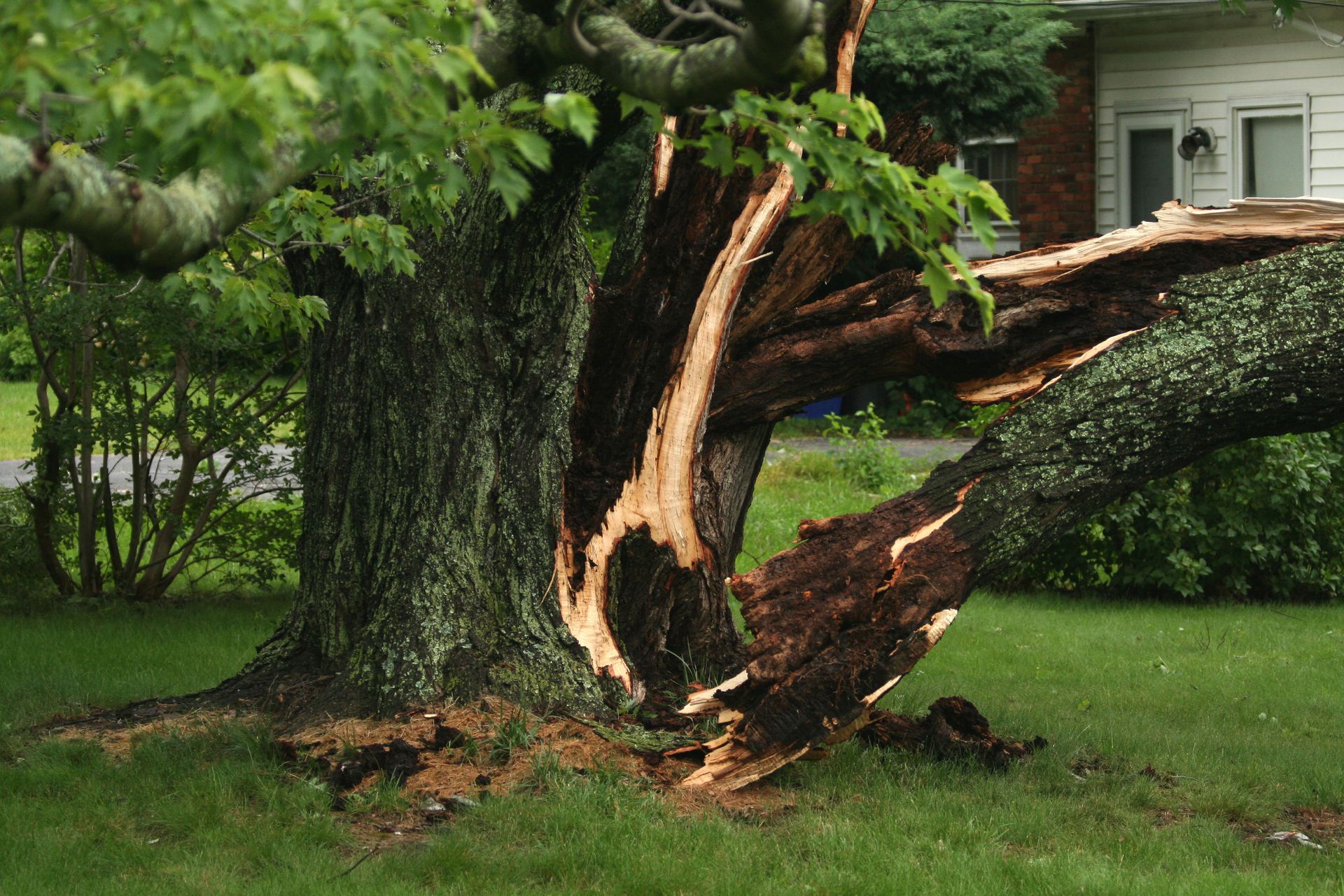
A leaning tree may display several warning signs before it falls. Cracks in the trunk, splitting branches, exposed roots, and disturbed soil around the base can indicate that its structural integrity has weakened. These conditions become particularly concerning when they appear alongside a noticeable change in the tree's position.
Damaged roots are especially important because they anchor the tree and help it withstand wind and other environmental pressures. When roots break or become exposed, the tree may lose the support needed to remain upright. A tree removal company can assess visible damage and determine whether the root system can continue supporting the tree safely.
Property owners should also pay attention to changes in the canopy. Extensive dead branches, thinning foliage, unusual discoloration, and significant bark deterioration can indicate disease or decay. When these symptoms occur alongside leaning, professional evaluation can help determine the appropriate response.
Understanding Weather-Related Tree Hazards
Severe weather can quickly turn a manageable tree condition into an urgent safety concern. Strong winds, thunderstorms, heavy snowfall, and ice accumulation place stress on trunks and branches, particularly when a tree already has structural weaknesses. Saturated soil can further reduce root stability, increasing the possibility of a tree falling unexpectedly.
Trees that lean toward houses, garages, driveways, or frequently used outdoor spaces require particular attention. A falling tree can damage roofs, vehicles, fences, and utility lines, creating additional hazards for residents and passersby. Contacting a tree removal company after severe weather can help property owners identify damage that may not be immediately obvious.
Storm damage can also affect trees that previously appeared healthy. Newly exposed roots, fresh cracks in the ground, and a sudden change in trunk position are reasons to keep people away from the affected area. If a tree appears unstable, avoid approaching it and arrange a professional assessment.
Evaluating the Risk to Nearby Property
The potential consequences of a tree falling depend partly on its location. A tree leaning toward an open field presents a different level of risk than one positioned above a home, sidewalk, parking area, or neighboring property. Assessing the surrounding environment helps determine how urgently the hazard needs to be addressed.
Large trees can cause substantial damage even when only part of the canopy or trunk falls. Branches may strike windows, damage roofing materials, block access routes, or interfere with overhead electrical lines. A tree removal company can evaluate the tree's condition and proximity to vulnerable structures when determining the safest course of action.
Property owners should also consider areas where people regularly gather. Playgrounds, patios, walkways, and outdoor seating areas may be exposed to falling branches or an unstable trunk. Addressing potential hazards before an incident occurs helps protect residents, visitors, and the surrounding property.
Recognizing Root Damage and Soil Movement
A tree's root system provides the foundation needed to support its weight. Although many roots extend below the surface, signs of root damage can sometimes be seen in the surrounding soil. Raised ground, exposed roots, cracks near the trunk, and sections of soil pulling away from the root plate may indicate instability.
Construction, excavation, drainage changes, and erosion can interfere with root development and anchorage. Even when the trunk appears intact, damage below ground can compromise the tree's ability to withstand wind. A tree removal company can assess these warning signs and determine whether the tree presents an unacceptable risk.
Soil movement is particularly concerning when it occurs alongside a new or worsening lean. These combined symptoms may indicate that the tree is beginning to uproot. If movement is noticeable, keep people and pets away from the area until a qualified professional can evaluate the situation.
Identifying Disease and Internal Decay
Disease and decay can weaken a tree over time, making it more susceptible to structural failure. Damaged bark, cavities, fungal growth, and extensive deadwood may indicate deterioration within the trunk or root system. Some problems remain hidden beneath the bark, which means a tree can appear relatively healthy while its internal structure is compromised.
Fungal growth near the trunk base may indicate decay in the wood or roots. However, not every mushroom or patch of discolored bark means a tree must be removed. A qualified professional can assess the symptoms alongside the tree's lean, overall condition, and surroundings.
When disease and structural instability occur together, the potential for failure can increase. A tree removal company can determine whether the tree can safely remain in place or whether removal is the more appropriate option. Early assessment may also identify nearby trees that need monitoring because of shared environmental or disease-related conditions.
Knowing When Professional Removal Is Necessary
Determining whether a leaning tree needs removal requires more than looking at its angle. The tree's species, size, age, root condition, structural integrity, and proximity to people and buildings all influence the level of risk. A professional assessment helps establish whether the lean is natural, temporary, or associated with a potentially dangerous structural problem.
A tree that suddenly begins leaning, shows significant root movement, or develops major trunk cracks should receive prompt attention. Trees with extensive decay or substantial damage after a storm may also require removal. A tree removal company can evaluate these conditions and explain the available options based on the tree's condition and the surrounding hazards.
Removal becomes especially important when a tree is likely to fall onto an occupied building, public walkway, or other vulnerable area. If overhead electrical lines are involved, keep your distance and contact the appropriate utility provider or emergency service. Property owners should never attempt to cut down or stabilize a potentially unstable tree themselves.
Protecting People and Property Through Timely Action
Waiting until a leaning tree falls can lead to preventable injuries, property damage, and expensive emergency work. Regular professional inspections can help identify changes in tree health, root stability, and structural condition before they become urgent concerns. These evaluations are particularly valuable for mature trees near buildings, driveways, and other frequently used areas.
After major storms, property owners should look for changes that can be observed safely from a distance. New ground cracks, broken limbs, and an altered trunk angle may indicate that further evaluation is necessary. If a tree appears likely to fall, keep the area clear and seek professional assistance rather than approaching it for a closer inspection.
A leaning tree should never be dismissed simply because it has not fallen yet. Changes in its angle, damaged roots, internal decay, and exposure to severe weather can all affect its stability. Recognizing these warning signs and arranging an appropriate assessment can help prevent dangerous situations.
Kingkiner Tree Service can help property owners evaluate concerning trees and determine when professional removal may be necessary. If you have a tree leaning toward your home, driveway, or another frequently used area, contact Kingkiner Tree Service to discuss your concerns and arrange an assessment. Taking action early can help protect your property and maintain a safer outdoor environment.